The laws that will not bend
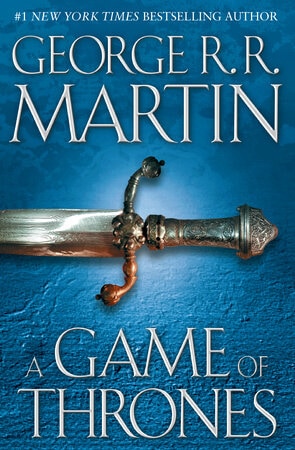
A Game of Thrones holds a special place in my heart. I remember the first time I opened it and could not put it down. To this day, even as each reread turns up flaws I had missed, it remains one of the favourites in my library: the novel that opened one of the great worlds of epic fantasy.
The book uses its prologue cleverly. It knows it has a slow start, and a carousel of eight point-of-view characters who will take you through fifty pages of introductions and setting. So it gives us the mystery first, and it is one of the best hooks in the genre. A huge wall made of ice? Medieval ice zombies in the woods beyond it? You want to know more. The book only partly pays off that hook, through Jon’s chapters, but by the end of A Game of Thrones there is no way to avoid opening the next instalment. It is a feeling that still haunts the series’ fans, who are waiting for the sixth book to this day.
What opens as a standard, if very good, epic fantasy turns out to be a masterclass in subverting expectations and a full deconstruction of the Tolkien tradition. In Martin’s world, Gandalf stays dead. If one thing defines A Game of Thrones, it is the genius absurdity of a realistic world that also contains dragons, sorcery and children bound to direwolves. The premise is that a fantasy world is not a world where anything can happen. It is a world with different laws of nature, and those laws will not bend to the reader’s will or expectation.
About a quarter of the way through, you start to realise that politics is the centrepiece, not magic. Succession, logistics and a crown drowning in debt are what plague the main characters, and those characters are torn over what honour, duty, love and home really are, or what they ask of them.
Chief among them is Tyrion Lannister. A character can only be as smart as the writer who gives them their lines, and George R. R. Martin is a very smart writer. Tyrion carries more advantages and disadvantages than anyone in his world: a great name and the wealth it provides, a body his own family despises, a lifetime of trauma, and a mind nobody around him can match. Every sentence he speaks is deliberate. He talks his way out of a death sentence, uses his gold and his name to gather a personal army, alienates the crown prince, and hands Jon Snow the advice that will shape him. And Martin is only warming up. By the next book, Tyrion’s words move the whole realm.
A Game of Thrones is not without flaws, though. You can see the marks of a first instalment and its early decisions: some continuity slips and a few thin plot points. My main issue is how special the Starks are. Six of the eight point-of-view characters are Starks or were raised as one, and they all begin in the same castle, which adds to the slow start. The direwolves fit the Stark children far too neatly, and the book never explains the omen. And then there is hair colour doing the work of a paternity test: a logical jump that feels unrealistic to make, yet Eddard treats it as proof of incest. But all of these imperfections pale beside the depth of the characters, the sharpness of the dialogue, and what is probably the second most unexpected death in fiction, beaten only by a later event in the same series.
Verdict: A Game of Thrones is a cornerstone of the fantasy genre. Much of the attention the genre has drawn since the television adaptation became a global hit traces back to this book, and none of it would have been possible without Westeros’s historic debut. The book is not perfect, and Martin refined both his recipe and his craft in the instalments that followed. But A Game of Thrones remains the book every fantasy writer wishes their own could match in acclaim.